Top Window Treatments in America: Definitive Guide
The intersection of fenestration design, interior ergonomics, and architectural thermal control across the United States requires nuanced, highly localized engineering. Furthermore, windows represent critical thermal vulnerabilities and visual interfaces within any building envelope. Managing solar radiation, acoustic transmission, and interior privacy demands high-performance window coverings that extend far beyond simple decorative curtains. Architects, interior designers, and homeowners continually navigate a dense marketplace of shading systems to optimize both aesthetic expression and environmental performance.
Evaluating window treatments involves balancing initial capital expenditures against long-term energy savings, mechanical reliability, and architectural integration. Property owners frequently struggle to select appropriate shading solutions because optimal performance depends entirely on regional microclimates, window orientation, and interior volumetric demands. A heavy motorized drapery system engineered to mitigate glare in a sun-drenched desert high-rise will prove counterproductive in a historic northeastern home requiring passive solar heat gain. Therefore, comprehensive fenestration planning demands rigorous technical evaluation rather than reliance on generic consumer trends.
The following analysis provides an exhaustive framework for selecting, deploying, and maintaining advanced window treatment strategies across diverse American environments. By examining historical precedents, optical physics, and real-world failure modes, this reference establishes an authoritative guide for achieving long-term interior comfort and building envelope optimization.
Understanding “top window treatments in america”
Breaking Down Misconceptions
Approaching interior shading requires a clear departure from standard aesthetic assumptions. When investigating the top window treatments in america homeowners and designers utilize, specifiers frequently encounter the misconception that visual decoration supersedes functional physics. In reality, window coverings serve as dynamic environmental regulators that directly influence building thermodynamics, daylight distribution, and occupant wellness.
The Thermal Realities of Shading
A frequent oversimplification involves treating all fabric shades and louvered blinds as interchangeable light-blocking devices. Consumers often assume that pulling any shade down automatically solves interior overheating. However, selective solar absorption and internal heat reflection vary drastically depending on fabric openness factors, backing materials, and the distance between the glass pane and the shade fabric. Failing to account for trapped heat pockets between the window and the shade can actually cause thermal stress fractures in multi-pane glass units. True mastery of what constitutes the top window treatments in america demands an analytical appreciation of these complex thermal and optical interactions.
Automation and Integration Challenges
Another critical friction point centers on automation integration and mechanical longevity. Modern luxury and mid-tier residential properties increasingly rely on motorized shading networks tied to home automation hubs. Consequently, specifiers must balance motorized torque ratings, power supply routing, and acoustic noise levels against architectural concealment requirements. As a result, successful installations must satisfy rigorous performance criteria while maintaining seamless interior aesthetics.
Deep Contextual Background
Early American Utility
The evolution of window treatments in American architecture mirrors the broader history of textile manufacturing, industrial design, and changing domestic lifestyles. In early American construction, interior window coverings were primarily utilitarian, consisting of heavy woolen or linen drapes designed almost exclusively to block drafty air infiltration and secure nighttime privacy. Glass manufacturing limitations meant windows were small, rendering complex light-diffusion systems unnecessary.
Industrial Shifts and the Energy Crisis
The mid-twentieth century introduced mass-produced aluminum horizontal blinds and lightweight synthetic roller shades, prioritizing affordability and ease of maintenance over thermal performance. These early products functioned as basic visual screens. However, the energy crises of the 1970s and subsequent building code shifts catalyzed a technical evolution. Window coverings began to incorporate reflective metallic backings, cellular insulating pockets, and engineered solar fabrics designed to actively reduce mechanical cooling loads.
Modern Technological Integration
In contemporary architectural practice, the demand for sophisticated interior shading has accelerated due to expansive glass curtain walls, rising utility costs, and the proliferation of smart home ecosystems. Modern manufacturing brings forth cellular honeycomb structures, precision motorized drives, and fabrics woven from sustainable fiberglass and polyester yarns. This technological progression underscores the shift from crude visual curtains to active environmental control components.
Conceptual Frameworks and Mental Models
Controlling solar heat gain and daylight glare via interior and exterior shading requires structured mental frameworks that translate building physics into practical design strategies.
-
The Solar Radiation Reflection-Absorption-Transmission Triad: This framework analyzes how incident sunlight striking a window treatment is reflected back outside, absorbed into the material as heat, or transmitted into the room. Furthermore, it tracks thermal performance across different materials.
-
The U-Value and Solar Heat Gain Coefficient (SHGC) Modification Model: This mental model evaluates how interior shading devices alter the overall thermal transmittance and solar heat gain of the combined glazing-shading assembly. Consequently, it guides climate-specific selections.
-
The Daylight Autonomy and Glare Control Balance: This analytical model tracks natural light penetration deep into floor plates, balancing productive daylighting against visual discomfort and screen glare. Additionally, it optimizes indoor environmental quality.
-
The Thermal Convection Air-Loop Theory: This framework evaluates how warm air trapped between a window and a tight-fitting shade circulates into the room, guiding the selection of side-channels and venting gaps.
These conceptual models prevent costly design errors, ensuring that window treatment interventions target the precise physical vectors responsible for energy loss and occupant discomfort.
Key Categories or Variations of Window Treatments
The shading systems available across the domestic market fall into distinct technical categories, each balancing thermal performance, optical control, and architectural compatibility.
-
Cellular Honeycomb Shades: Engineered fabric shades featuring distinct hexagonal air pockets that trap dead air, providing exceptional thermal insulation against heat loss and gain.
-
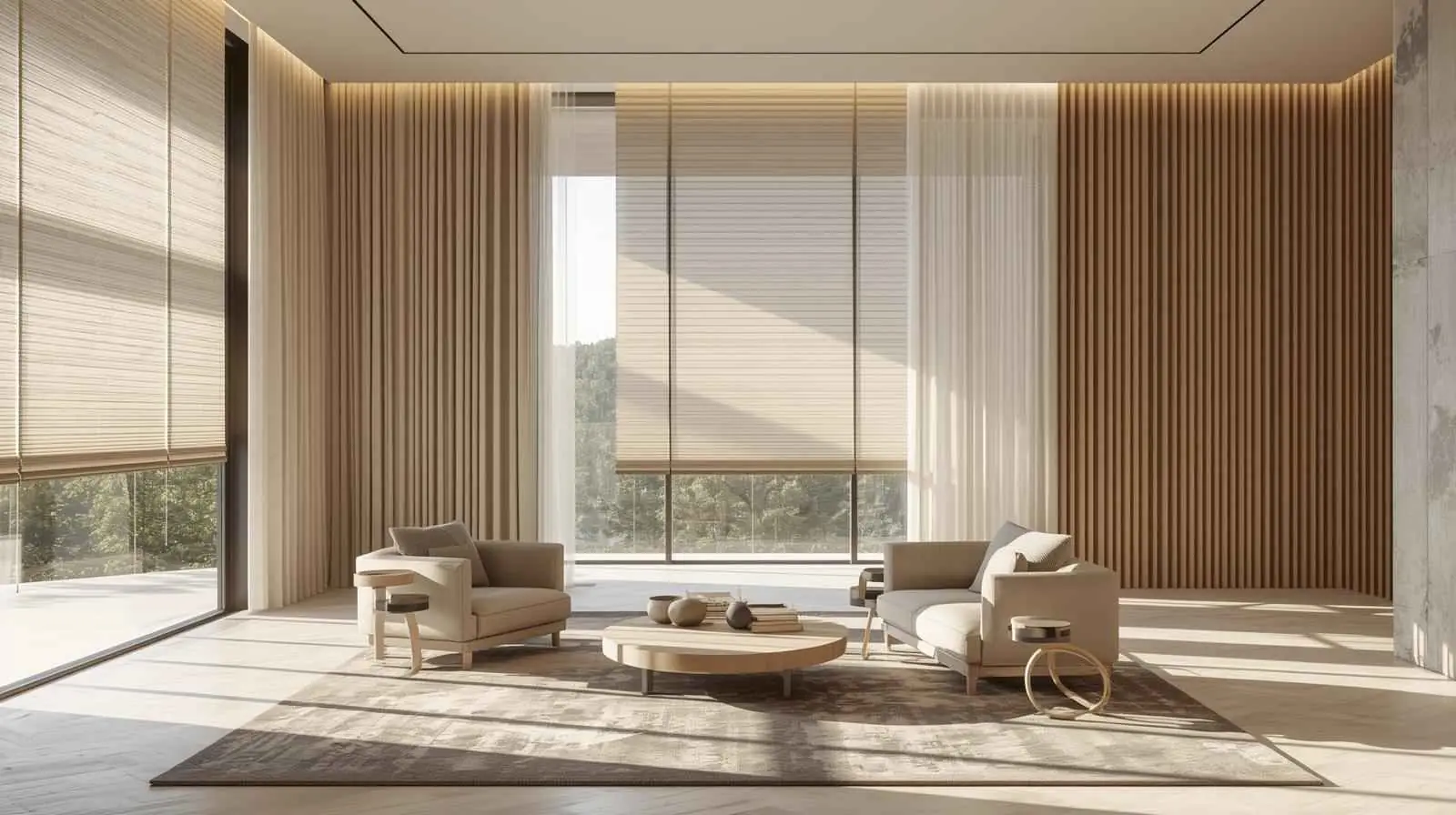
Motorized Roller Shades: Sleek, minimalist fabric shades driven by tubular motors, offering precise light control and integration with home automation networks.
-
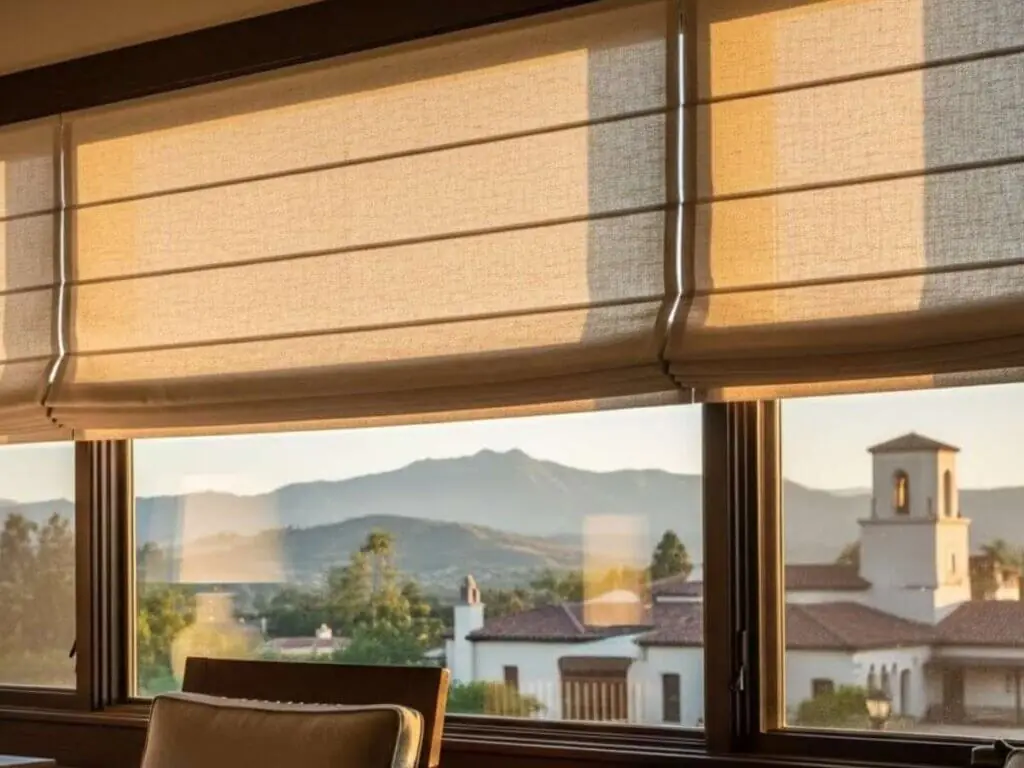
Custom Roman Shades: Soft-folding fabric treatments that stack cleanly when raised, combining traditional textile aesthetics with modern blackout or light-filtering linings.
-
Wood and Faux-Wood Horizontal Blinds: Rigid louvered slats made from natural hardwoods or moisture-resistant composites that tilt to redirect natural daylight.
-
Woven Wood and Bamboo Shades: Natural textured shades crafted from reeds, grasses, and bamboos that filter sunlight while maintaining organic visual warmth.
-
Dual-Layer Zebra and Transitional Shades: Layered sheer and solid fabric bands that slide past each other to create variable privacy and light diffusion effects.
-
Architectural Plantation Shutters: Sturdy interior shutter panels featuring operable louvers mounted directly within the window jamb for classic structural framing.
| Shading Category | Primary Thermal Advantage | Visual Impact | Primary Technical Limitation |
| Cellular Honeycomb Shades | Exceptional R-value insulation in cold climates | Soft, clean lines with minimal visual bulk | Limited outward visibility when fully lowered |
| Motorized Roller Shades | Excellent solar heat rejection via specialized fabrics | Sleek, modern aesthetic tailored for expansive glass | Requires electrical power routing or battery maintenance |
| Woven Wood Shades | Natural light diffusion and organic texture | Warm, textured aesthetic with varied opacity | Natural materials can stretch or warp under humidity swings |
| Horizontal Wood Blinds | Precise directional control of natural daylight | Traditional structure with adjustable slat angles | Heavy slats can sag across wide spans over time |
| Plantation Shutters | Durable structural presence and privacy control | Permanent architectural feature enhancing property value | Blocks partial window opening space when swung open |
Decision Logic for Shading Selection
When determining the optimal window treatment strategy for a specific space, design professionals evaluate governing environmental and structural constraints. If a residential living room features expansive west-facing glass in a hot southern climate, deploying motorized roller shades with high solar reflectance prevents indoor overheating. Conversely, if a bedroom in a northern climate requires maximum nighttime warmth retention, installing double-cell honeycomb shades provides the necessary thermal resistance.
Detailed Real-World Scenarios
Examining concrete operational environments illustrates how advanced window treatments perform under extreme architectural constraints.
A : Glass-Wrapped High-Rise Condominium in Miami
A luxury residential tower overlooking Biscayne Bay experienced severe solar heat gain and blinding glare through floor-to-ceiling glass walls. The project team specified motorized solar roller shades featuring a 3% openness factor and a metallized exterior backing. Furthermore, this intervention dramatically reduced cooling loads, eliminated screen glare, and preserved panoramic ocean views without manual adjustment.
B : Historic Craftsman Bungalow in Minneapolis
A historic home featuring drafty single-pane wood windows suffered from severe winter heat loss and morning cold drafts. The homeowners installed custom-fit double-cell honeycomb shades with tight side-tracks to seal edge gaps. Consequently, this retrofit improved interior thermal comfort significantly, reduced heating utility demands, and maintained the home’s historic interior aesthetic.
C : Contemporary Open-Plan Residence in Austin
A modern desert residence featuring double-height clerestory windows required automated light control to manage harsh afternoon sun angles. The engineering team integrated a centralized motorized shading network programmed with astronomical timeclocks and sun-tracking sensors. As a result, this system adjusted shade positions dynamically throughout the day, protecting interior furnishings from ultraviolet fading while optimizing daylight harvesting.
Planning, Cost, and Resource Dynamics
Executing a comprehensive window treatment project requires structured resource allocation across material customization, precise field measuring, and professional installation labor.
Direct costs encompass specialized performance fabrics, tubular automation motors, custom wood or composite slats, and heavy-duty headrail hardware. Indirect costs involve professional laser measuring, wiring infrastructure for motorized systems, and specialized scaffolding for multi-story or clerestory windows. Treating window treatments as off-the-shelf retail commodities is a critical budgeting error. Furthermore, custom window openings in high-end architecture rarely feature perfect square alignments, making precision measuring and custom fabrication essential.
Opportunity costs manifest when property owners delay proper shading investments to minimize upfront capital outlays. Inefficient solar control forces primary HVAC systems to cycle continuously, accelerating mechanical wear and driving up annual cooling expenditures.
| Expense Category | Budget Impact Driver | Cost Variability Factors | Long-Term Financial Implication |
| Standard Manual Roller Shades | Low-Moderate | Fabric grade, manual clutch quality, width dimensions | Basic visual privacy with minimal thermal performance gain |
| Cellular Honeycomb Shades | Moderate | Single vs. double cell, custom cell size, blackout lining | Lowers seasonal heating and cooling energy consumption |
| Motorized Roller Shades | High | Motor brand, power source type (hardwired vs. battery), fabric | Reduces peak cooling electrical demand and enhances convenience |
| Custom Wood Plantation Shutters | High-Exceptional | Wood species, custom paint matching, hinged panel design | Permanent architectural asset with high durability and insulation |
Tools, Strategies, and Support Systems
Deploying advanced window treatments effectively requires specialized measuring instruments, installation hardware, and rigorous technical standards.
-
Digital Laser Distance Meters: Precision optical devices used to measure window recess widths and heights down to a fraction of a millimeter.
-
Handheld Lux Meters: Optical instruments used to measure natural daylight illumination levels and verify glare reduction post-installation.
-
Tubular Motor Programming Remotes: Specialized handheld units used to set upper and lower travel limits on motorized shades.
-
Low-Voltage Power Distribution Panels: Centralized power supplies designed to route structured low-voltage DC power to multiple motorized shade locations.
-
Infrared Thermography Cameras: Diagnostic tools used to verify thermal performance differences before and after shade deployment.
-
Acoustic Decibel Meters: Instruments used to measure the operating noise level of tubular motors in quiet residential environments.
-
Laser Leveling Tools: Precision alignment devices ensuring multi-bay shade installations hang perfectly level across wide expanses.
-
Heavy-Duty Scaffolding and Lift Equipment: Specialized mechanical access tools required for installing oversized shades in vaulted or multi-story spaces.
Risk Landscape and Failure Modes
The risk landscape associated with window treatments involves motor failure, fabric telescoping, structural sagging, and thermal glass stress. These risks frequently compound through interconnected failure chains.
The primary systemic risk is insulated glass unit thermal stress cracking caused by improper shade selection. When a dark, tightly fitting roller shade is deployed fully against a double-pane window in direct sunlight, solar energy is trapped between the glass and the shade. This localized temperature spike can create extreme thermal differentials across the glass lite, leading to catastrophic edge cracking. Mitigating this risk requires selecting light-colored exterior-facing fabrics and maintaining adequate ventilation gaps around the window perimeter.
Secondary risks involve motor synchronization loss and power supply degradation in automated systems. When wireless control signals face interference or low-voltage wiring experiences voltage drop over long runs, shades can lose their programmed limits. Consequently, managing this risk requires utilizing hardwired power busses and robust mesh communication protocols.
Governance, Maintenance, and Long-Term Adaptation
Maintaining long-term performance and pristine operation across window treatment systems requires structured governance frameworks, scheduled inspection protocols, and proactive maintenance cycles.
Facility managers and homeowners should establish formal review schedules, inspecting manual pull cords, motorized drive gears, and fabric hem bars semi-annually. Accumulating dust and particulate matter on delicate solar fabrics can degrade performance and cause discoloration over time.
Adjustment Triggers and Remediation Protocols
When specific performance regressions occur, targeted interventions must follow immediately:
-
Fabric Telescoping: Indicated by the shade rolling unevenly to one side and fraying the fabric edges. Remediation requires applying adjustment shim tape to the roller tube to correct tracking alignment.
-
Motor Limit Slippage: Indicated by shades stopping short of their fully raised or lowered positions. Remediation requires reprogramming the upper and lower electronic travel limits via the hand remote.
-
Cord or Clutch Wear: Indicated by slipping clutches or frayed manual beaded chains. Remediation requires replacing the worn mechanical clutch assembly immediately.
Maintaining a comprehensive maintenance log tracking installation dates, motor firmware versions, and cleaning cycles ensures long-term operational reliability.
Measurement, Tracking, and Evaluation
Evaluating the success of window treatment installations requires balancing quantitative energy and glare data against qualitative occupant comfort feedback.
Leading indicators focus on process compliance: verifying that opening measurements are exact, ensuring motor wiring is tested prior to drywall closure, and confirming fabric openness specifications. Lagging indicators measure operational outcomes: tracking reductions in cooling utility expenditures, monitoring occupant visual comfort logs, and evaluating interior surface temperature stability.
Documentation Examples
To maintain rigorous accountability, project teams utilize standardized recording templates:
-
Shading Schedule and Specification Sheet: Catalogs room locations, fabric opacity ratings, motor types, and control channel assignments.
-
Commissioning and Limit Verification Log: Records travel limit settings, motor response times, and automation integration test results.
-
Maintenance and Warranty Record: Summarizes product warranty coverage, cleaning instructions, and service contact protocols.
Common Misconceptions and Oversimplifications
Navigating the market for window treatments requires dispelling persistent myths that routinely lead to poor product selection and operational failure.
-
Myth: Any heavy curtain will block summer solar heat gain effectively.
-
Correction: Dark interior draperies absorb solar radiation and reradiate heat directly into the room; effective heat rejection requires exterior shading or metallized interior fabrics.
-
-
Myth: Motorized shades require constant battery replacements and complex maintenance.
-
Correction: Modern hardwired or low-voltage centralized power systems operate reliably for years with virtually zero user intervention.
-
-
Myth: Honeycomb shades are fragile and prone to tearing under normal daily use.
-
Correction: High-quality non-woven polyester honeycomb structures are highly durable, anti-static, and resistant to sagging.
-
-
Myth: Window treatments have no impact on building energy efficiency codes.
-
Correction: Advanced insulating shades contribute significantly to whole-building thermal performance and can assist in meeting modern energy compliance standards.
-
-
Myth: All blackout fabrics perform identically regardless of color.
-
Correction: While light blocks vision, white or reflective exterior-facing blackout fabrics bounce solar radiation away much more effectively than dark fabrics.
-
-
Myth: Measuring windows for custom treatments is simple enough to do with a standard cloth tape measure.
-
Correction: Precise steel tape measurements accounting for out-of-square framing tolerances are mandatory to prevent binding and light gaps.
-
Ethical, Practical, and Contextual Considerations
The selection and installation of window treatments carry professional responsibilities that extend far beyond interior decorating. Optimizing natural daylight while mitigating solar heat gain directly reduces carbon emissions associated with commercial and residential cooling loads, supporting broader environmental sustainability goals. Furthermore, controlling glare and enhancing visual comfort directly impacts the psychological well-being, visual health, and daily productivity of building occupants.
Designers, installers, and property owners hold a profound duty of care to ensure that shading interventions enhance architectural safety, privacy, and indoor environmental quality without compromising structural integrity or aesthetic harmony.
Conclusion
Selecting and integrating window treatments across diverse American architectural typologies requires a rejection of simplistic product generalizations in favor of rigorous technical evaluation. From analyzing solar radiation vectors and thermal U-factors to implementing robust motorized systems and maintenance schedules, every detail dictates long-term interior comfort and operational efficiency. By systematically aligning shading capabilities with specific regional climate stresses and architectural requirements, property owners can achieve exceptional energy performance, superior visual control, and durable structural protection. True architectural longevity emerges from disciplined planning, careful material selection, and an unwavering commitment to quality.